


Paid advertising costs have gone up by 42% since 2023. Meanwhile, referral programs continue delivering customers at a fraction of the cost with higher retention rates and better lifetime value.
The reason is simple: people trust recommendations from friends more than any ad they’ll ever see. But here’s the catch! Most referral program systems fail because they’re poorly designed, difficult to use, or offer rewards nobody cares about.
This blog shows you how to build a referral program that turns satisfied customers into your most effective marketing channel. We’ll cover strategy, execution, automation, and real-world examples from brands that got it right.
Why a Referral Program Still Dominates in 2025
Not every customer will spread the word. A referral program only works when it starts with people who already care.
Referred customers convert 4x faster than leads from paid channels. They also spend 16% more on average and have a 37% higher retention rate over three years.
The math is compelling. If your customer acquisition cost through ads is $150, a well-executed referral program can bring that down to $30-50 while improving customer quality.
But success starts with one critical foundation: product-market fit. No incentive can compensate for a mediocre product. Your existing customers need to genuinely love what your referral program offers before they’ll risk their reputation recommending it.
Who Should You Target First?
Not every customer becomes a brand advocate. Focus your initial outreach on:
- Repeat buyers who’ve purchased 3+ times
- Review leavers who’ve shared positive feedback
- High-engagement users who interact with your emails or content
- Social sharers who already tag or mention your brand
These groups already demonstrate loyalty. They’re 8x more likely to refer than a first-time buyer. Start here, gather feedback, and refine to build referral program before opening it to everyone.
Step-by-Step Framework to Build a Referral Program

Building a referral program that actually scales isn’t about fancy software or luck. It’s about structure. This section aims to turn your customer referral program into a steady acquisition system that doesn’t rely on ads.
Step 1: Set Specific, Measurable Goals
Unclear goals create vague results. Define exactly what success looks like:
- New customer acquisition: “Generate 500 referred customers in Q1”
- Revenue impact: “Drive $50k in revenue from referrals this quarter”
- Customer quality: “Achieve 30% higher LTV from referred customers”
Pick one primary goal and 2-3 supporting metrics. Track referral rate (% of customers who refer), conversion rate (% of referrals that convert), and average order value from referred customers.
Step 2: Choose Rewards That Actually Motivate
The best rewards match your business model and customer preferences. Invite them to test your referral rewards program first.
For E-commerce:
- Store credit (25-30% of average order value)
- Percentage discounts (15-20% off next purchase)
- Free products at spending thresholds
For SaaS:
- Account credits (1 month free for every 3 referrals)
- Feature upgrades (premium features for successful referrals)
- Cash payouts ($50-100 for B2B products)
For Services:
- Service upgrades (free session or consultation)
- Membership extensions (extra month for each referral)
- Exclusive access (VIP features or early access)
Double-sided rewards (benefits for both referrer and referee) increase participation by 28%. The referee should receive enough value to overcome purchase hesitation, while the referrer gets meaningful thanks for their effort.
Step 3: Make Sharing Effortless
Every additional step in your referral reward flow reduces completion rates by 15-20%. Minimize friction:
- One-click sharing to email, SMS, WhatsApp, and social media
- Pre-written messages that users can customize
- Unique referral links that track automatically
- Mobile-optimized flows (60% of shares happen on mobile)
Test your flow yourself. If it takes more than 30 seconds from clicking “refer” to sending the first invite, simplify it.
Step 4: Automate Tracking and Reward Delivery
Manual processing kills momentum. Delays between referral and reward reduce participation by up to 40% (as per our experience at myCred).
Use referral software that handles:
- Automatic referral link generation
- Real-time tracking and attribution
- Instant reward delivery upon conversion
- Fraud detection and prevention
- Analytics dashboard for performance monitoring
Popular platforms include ReferralCandy (e-commerce), Viral Loops (SaaS/startups), myCred (B2B), and Yotpo (integrated loyalty + referrals).
Step 5: Place Your Referral Program Where Customers Already Are
Visibility drives participation. Feature your best referral programs in high-traffic touchpoints:
- Post-purchase pages (62% engagement rate)
- Order confirmation emails (48% open rate)
- Customer onboarding flows (for SaaS)
- Thank you pages (momentum from completed action)
Use clear CTAs like “Give $20, Get $20” or “Share with friends, earn rewards.” Avoid generic phrases like “Tell a friend about us.”
Step 6: Personalize Your Referral Requests
Segmentation increases referral rates by 35%. Tailor your messaging based on:
Customer tenure:
- New customers (30 days): “Love your purchase? Share it with friends for $10 off your next order”
- Loyal customers (6+ months): “You’ve been with us for half a year—here’s an exclusive reward for spreading the word”
Purchase behavior:
- High-value customers: Offer premium rewards
- Frequent buyers: Gamified milestones
- Single purchase: Focus on product satisfaction first
Engagement level:
- Active users: Direct referral asks
- Dormant users: Re-engagement offers tied to referrals
Airbnb mastered this referral program system by timing referral requests immediately after positive experiences (great stays, 5-star reviews).
Step 7: Protect Against Fraud
Referral abuse can drain budgets fast. Common fraud patterns include:
- Self-referrals using alternate emails
- Fake accounts to claim rewards
- Referral farms exploiting loopholes
Prevention tactics:
- Require email verification for both parties
- Validate purchases before releasing referral rewards
- Track IP addresses and device fingerprints
- Set velocity limits (max referrals per user per day)
- Monitor for suspicious patterns (mass sign-ups from same IP)
Most referral reward program platforms include built-in fraud detection. Enable all available protections from day one.
Step 8: Test, Measure, and Optimize Continuously
Your first version won’t be perfect. Run A/B tests on:
- Reward amounts (is $10 vs $15 worth the cost difference?)
- Reward types (credit vs discount vs cash)
- Messaging (emotional vs transactional copy)
- CTA placement (email vs dashboard vs checkout)
- Sharing channels (which platforms drive most conversions?)
Change one variable at a time and measure over at least 2-3 weeks. At myCred, we have seen small improvements compound; a 5% boost in referral rate and 3% lift in conversion rate can double the ROI of your referral program.
Step 9: Build Community Around Your Advocates
The most successful programs treat top referrers as VIPs:
- Exclusive access to new products or features
- Private community for feedback and networking
- Recognition through a leaderboard or badge
- Special perks beyond the standard referral rewards program
Morning Brew built a referral ladder where readers unlocked escalating rewards (stickers → mugs → exclusive content → event invitations). This kept people engaged long after their first referral.
Step 10: Scale With Gamification and Milestones
myCred is the best tool to gamify your referral program. Once your basic referral system works, layer in progression mechanics:
Tier systems:
- Bronze: 1-3 referrals → $10 per referral
- Silver: 4-9 referrals → $15 per referral + exclusive merch
- Gold: 10+ referrals → $20 per referral + VIP status
Milestone unlocks:
- 5 referrals: Unlock premium feature
- 10 referrals: Lifetime discount
- 25 referrals: Join advisory board
Dropbox combined both. Users earned storage space per referral AND unlocked bonus space at milestones. This simple gamification technique drove 60% of their new signups.
What are The Real-World Best Referral Programs
The best way to understand what works is to see it in action. These referral program examples show how different industries use rewards, automation, and simple design to scale.
Dropbox: Utility as Currency
Dropbox offered extra storage space instead of cash. Both referrer and new user received 500MB per successful referral, up to 16GB.
Why it worked:
- Reward was the core product value
- No cash meant no budget constraints
- Built directly into the product interface
- Created viral loop (more storage = more files = more sharing)
Uber: Frictionless Code Sharing

In this referral system example, every rider received a unique code worth one free ride. Sharing it gave friends a free first ride and gave the referrer credit after completion.
Why it worked:
- Zero friction (just share a code)
- Immediate value for new users (free ride)
- Automated tracking and rewards
- Network effect in local markets
Morning Brew: The Referral Ladder
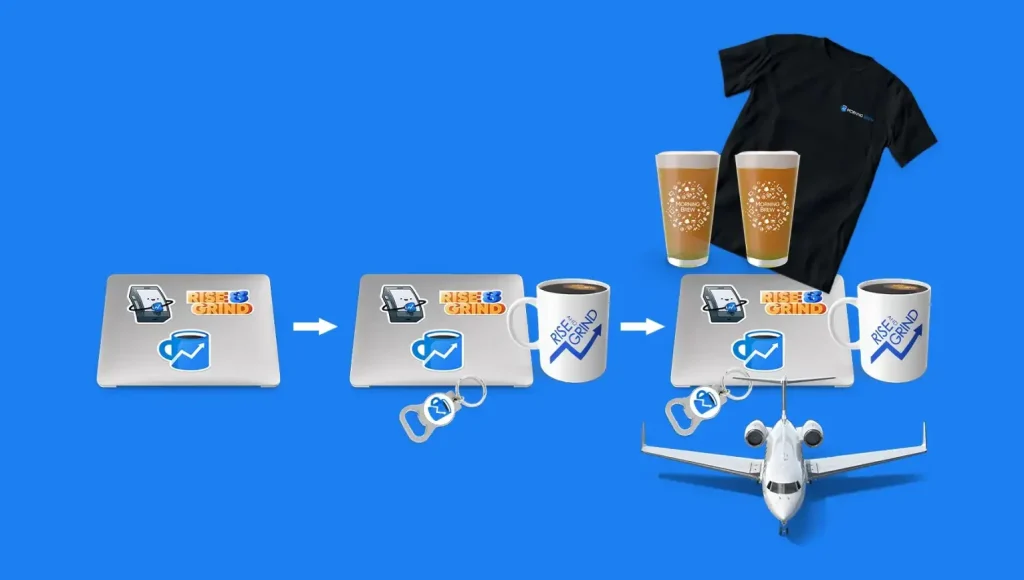
In this referral system example, instead of one referral reward, Morning Brew created milestones: 3 referrals = stickers, 25 referrals = mug, 50 referrals = exclusive content, 1000 referrals = VIP event access.
Why it worked:
- Multiple motivation points
- Rewards matched audience (content lovers)
- Visual progress bar showed advancement
- Created a competitive element among readers
Harry’s: Pre-Launch Waitlist Gamification
Before launching, Harry’s built a waitlist where people could skip ahead by referring friends. The more referrals, the earlier access to products and exclusive discounts.
Why it worked:
- Created urgency and exclusivity
- Built social proof before launch
- Generated 100k emails in one week
- Validated demand before spending on inventory
Tesla: Status-Driven Referrals
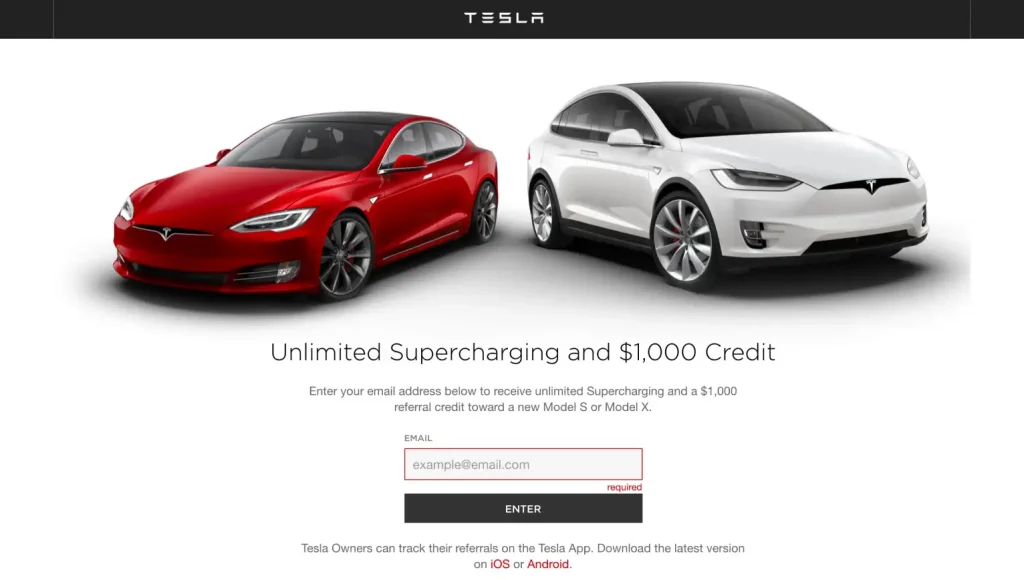
Tesla’s referral program offered prizes like exclusive vehicle accessories, invitations to unveiling events, and even free cars for top referrers.
Why it worked:
- High-value products justified premium rewards
- Status and exclusivity matched brand identity
- Community of advocates became brand ambassadors
- Rewards reinforced luxury positioning
Essential Tools and Platforms to Build a Referral Program

Choosing the right referral reward platform determines how smoothly your program runs.
ReferralCandy
Best for: Shopify and WooCommerce stores
Handles everything e-commerce brands need: coupon generation, email automation, referral tracking, and reward fulfillment. One-click integration with major platforms.
Pricing: Starts at $49/month + commission
Viral Loops
Best for: SaaS and startups
Offers pre-built templates based on proven models (Dropbox, Airbnb, Harry’s). Integrates with HubSpot, Mailchimp, and Zapier. Strong analytics and A/B testing.
Pricing: Starts at $99/month
Referral Rock
Best for: B2B and growing businesses
More customization than plug-and-play tools. Supports complex reward structures, CRM integrations (Salesforce, HubSpot), and affiliate-style tracking.
Pricing: Starts at $200/month
Yotpo
Best for: Brands using loyalty + referrals
Combines reviews, loyalty, and referrals in one platform. Automatic triggers when customers hit loyalty milestones. Unified analytics across all referral programs.
Pricing: Custom pricing
Metrics and KPIs for a Sustainable Referral Program

Referral performance depends on consistent measurement. Tracking the right KPIs separates short-lived campaigns from scalable systems.
- Referral Rate: Percentage of customers who refer at least one person. Industry average: 2-5%.
- Conversion Rate: Percentage of referred leads who become customers. Target: 25-40%.
- Customer Acquisition Cost (CAC): Total program cost divided by new customers acquired. Compare to the paid channel CAC.
- Lifetime Value (LTV) Lift: Compare the LTV of referred customers vs. non-referred. Referred customers typically show 20-40% higher LTV.
- Time to First Referral: How long after purchase do customers first refer? Shorter = better product-market fit.
- Fraud Rate: Percentage of invalid or fraudulent referrals. Should stay under 5%.
- Program ROI: (Revenue from referred customers – program costs) / program costs. Healthy programs achieve 300-500% ROI.
Sample Dashboard Tracking Table to Build a Referral Program
| Metric | Target | Current | Status |
|---|---|---|---|
| Referral Rate | 5% | 3.2% | Needs Improvement |
| Conversion Rate | 30% | 35% | Strong |
| CAC via Referrals | $40 | $38 | On Track |
| LTV Lift | +30% | +42% | Exceeding |
| Fraud Rate | <5% | 2.1% | Healthy |
| Program ROI | 400% | 425% | Strong |
Reddit Insights to Build a Referral Program
Reddit threads reveal how real founders and marketers approach to build a referral program systems beyond polished case studies. Key discussions show what’s working in 2025.
- r/SaaS – “Referral programs only work if your core product is worth sharing.”
Users emphasized that without a strong product-market fit, referral bonuses are wasted. - r/marketing – “Automate tracking or don’t bother.”
Marketers shared that manual tracking caused fraud and broken links; tools like myCred, ReferralCandy, and Viral Loops were repeatedly cited. - r/growthhacking – “Double-sided rewards outperform single-sided incentives.”
Consensus across threads: both referrer and referee rewards improve participation and reduce drop-off. - r/ecommerce – “Gamified tiers keep customers active.”
Users recommended gamification plugins like myCred for points-based referral ladders that evolve over time.
Ending Note on How to Build a Referral Program
In 2025, to build a referral program that drives real growth, treat it as an owned channel, not a side campaign. A customer referral program now sits at the center of retention and acquisition strategies. The most effective systems mix automation, personalization, and data-driven decisions. The best referral programs in 2025 are built around community. They turn satisfied users into repeat advocates through well-structured referral rewards programs.
Start simple. Launch fast. Optimize continuously. Your customers are already talking about you. So, give them a referral system that rewards it.